That Which Cannot be Seen nor Heard: Palestinian Displacement, Aesthetic Opacity, and Political Refusal in Mona Hatoum’s Measures of Distance (1988)
Koby Chen, Yale University
Pools of color seep across the screen like patches of dusk. The video begins with a soft image that reads like an abstract painting – washes of deep black, royal purple, rich blue, and dusty pink. Overlaid are sprawling lines of Arabic script. The handwritten words are at some points discernible; at others, they fall into shadow (Fig 1). A conversation erupts. Lilting female voices bounce back and forth, scattered laughter in between their Arabic phrases. Then, in English, a steady voice begins to recite a grief-stricken letter:
My dear Mona, the apple of my eyes. How I miss you and long to feast my eyes on your beautiful face that brightens up my days. When you were here, the whole house was livened up by your presence. Now it feels like the house has lost its soul. I wish this bloody war would be over soon so that you and your sisters can return. And we’ll all be together again like the good old days…
The laughter and conversation continue in the background, hauntingly, over the reading. The audio is fuzzy and ambient. The visuals continue to shift, and what is depicted is still unclear. The forms resemble an out-of-focus limb, perhaps a finger, or the curves of flesh. Visual and auditory information is withheld; one cannot fully discern what they see or hear.
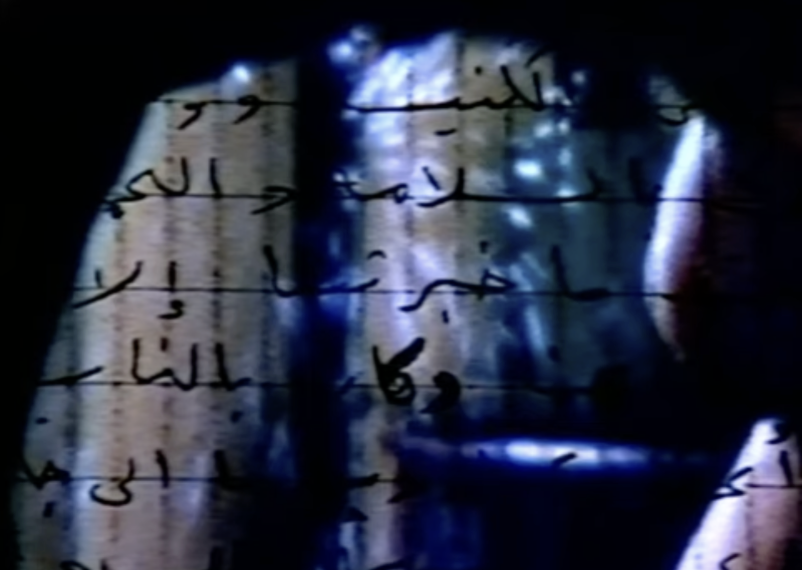
Figure 1. Mona Hatoum, Measures of Distance, 1988. Video still (2:03). Courtesy of the Museum of Modern Art, New York.
The slow opening to Mona Hatoum’s Measures of Distance sets the artwork’s mournful, longing tone. Made in 1988, the video operates at the interstice of film, documentary, and mixed-media art. Based on epistolary exchanges between mother and daughter, the work explores the severance of kinship and extended states of exile experienced by multiple generations of Palestinians.
The artwork is a composite of various pieces of Hatoum’s communication with her mother over the years. While initially vague, the images reveal themselves as photographs of the mother in the shower. The superimposed texts are scanned segments of their letters. The ongoing soundtrack is a recording of a conversation between Hatoum and her the last time they were together. The main narration is the artist herself reading an English translation she received. While these elements are deeply personal, the piece itself strays from traditional testimony or documentary genres because much of the information presented is obscured. The shifting imagery is partially obscured, blurred, and fragmented. The sonic dimension has multi-lingual audio tracks, interruptions, and pauses.
Rather than interpreting the fractured audio and obscured imagery solely as expressions of loss, distance, or trauma, these artistic interventions can be understood as forms of resistance. This essay contends that such aesthetic strategies constitute an intentional grammar of withholding, through which Mona Hatoum resists rendering Palestinian womanhood intelligible to Western ethnographic modes of perception. Drawing on Édouard Glissant’s framework of opacity and Audra Simpson’s political strategy of refusal, the following analysis examines Measures of Distance to explore the sensory politics of Palestinian displacement under ongoing imperial and colonial conditions.
The History of ‘Distance’ and the Poetics of Displacement:
We can begin with the complicated and violent history evoked by Measures of Distance. Notably, this is the first work in Hatoum’s oeuvre to be autobiographical. While she frequently thematizes war and displacement in Southwest Asia and North Africa, this video is the first to explicity engage her own familial history.
The work’s starting point is Hatoum’s condition of double exile. She is the daughter of Palestinian refugees living in Lebanon. Then, she becomes exiled once again when a short trip to London in 1975 becomes a permanent relocation due to the eruption of the Lebanese civil war, preventing her return to her home city of Beirut.
Her family history can be tied to the dispossession and forced dispersal of Palestinians, like many others who sought asylum in Lebanon after the first Nakba in 1948, and continue to be displaced to this day. The resulting condition of life for many Palestinians is a protracted condition of distance that is not only geographic but also legal and political. Fleeing the immediate violence of the Nakba, Palestinians experienced what it means to be made a refugee, and the violence of living in the host state of Lebanon. Regional conflict and asymmetries of international power continually shaped their livelihoods.
As Laleh Khalili analyzes in Time in the Shadows, displacement is a recurring strategy of the self-proclaimed “liberal” counterinsurgencies against Palestinian independence. Khalili writes that the “European legal corpus has long used banishment and exile as tools for the control of territories that European countries have held as colonies…[giving] European powers the ability to send undesirables–criminal or political–from one colony to the other.” Exile and dislocation were strategies which perpetually criminalized Palestinians and removed insurgents and political leaders who resisted colonial rule. Khalili mentions case examples of 1936 and 1937 of the strategy of removal – it allowed for the search and arrest of masses of people, destroying property and livelihoods. The condition of exile existed before the Nakba, during Britain’s colonial regime in Palestine:
During the Arab Revolt that began in 1936, Britain reinforced old and enacted new emergency regulations that severely expanded the police powers of the British mandatory government in Palestine and circumscribed the legal avenues for the rebels. The Emergency Regulations of 1936 and the Palestine (Defence) Order in Council of 1937 permitted collective punishments such as fines and house destructions, significantly loosened the burden of evidence, legalized unannounced punitive searches, and expanded the death penalty.